2025 was a significant year: one that called for grateful reflection on progress made, but also a renewed determination to face the challenges ahead and find a way to create new opportunities for bold action, together.
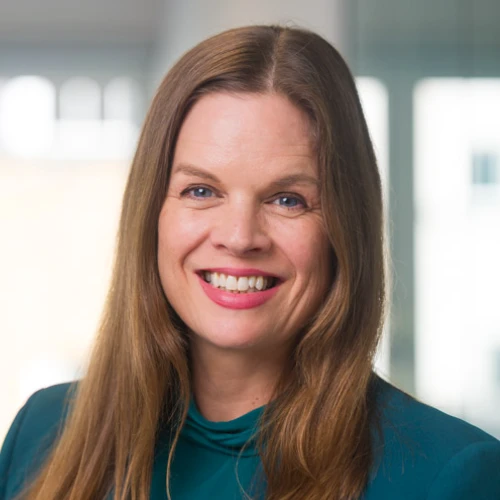
A decade ago, I was in Paris taking part in the historic climate conference. It was the largest ever meeting of heads of government, where countries came together with civil society, scientists, intergovernmental agencies, the private sector and others, to forge a global agreement to protect people and the planet from irreversible climate harm. I remember the urgency of that moment and the extraordinary hope that came from watching the world commit to a shared future.

Ten years on, the world looks different. Waves of crisis have tested global cooperation and made effective delivery more difficult. Publics in many countries are turning inwards when confronted with increased uncertainty and vulnerability. And yet we stand five years from 2030: the deadline by which every United Nations member state pledged to achieve the Sustainable Development Goals (SDGs). These universal commitments to improve people’s lives remain central to CIFF’s partnerships, enabling us to align with governments, international institutions, civil society, academia and the private sector to accelerate practical action towards a world that is safe, healthy, and prosperous for children.
Throughout 2025, our partners achieved remarkable successes within a context that, at times, was seen to be working directly against them. They pushed forward with innovation and acted with agility to advance children’s health and nutrition, opportunities and choice for women and girls and climate action. A few examples include:
Breaking the cycle of HIV transmission.
CIFF continued work to prevent the cycle of HIV transmission. Last year, with our partners, we championed access to lenacapavir, a drug described as “the closest thing to a [HIV] vaccine we have” (AAAS, 2025) – a twice-yearly injection which has the potential to save millions of lives and end the epidemic for good.
Supporting the climate transition.
The rapid expansion of renewable energy worldwide shows how climate action can improve lives while keeping costs down. Renewable energy outpaced coal in power generation for the first time and solar alone met almost all the global rise in electricity demand (EMBER, 2025). African solar imports increased by 60%. In Spain, industries are paying 20% less for electricity after installing significant amounts of solar and wind (Caixa Bank, 2025). This progress reflects years of sustained collaboration across governments, industry and civil society.
Sources: Ember Energy, 2025, Caixa Bank, 2025
.svg)
Ending violence against children (EVAC).
Following on from the first ever EVAC Ministerial in 2024, CIFF has worked throughout 2025 with government and civil society in India and in East Africa to end child marriage and keep children in school.
CIFF supports partners to scale evidence-based policy and practice to improve the lives of as many children as we can with the resources that we have. Last year, we increased our charitable commitments to over US$1.45 billion – US$901 million of which came from CIFF’s endowment and US$551 million coming from restricted commitments from Sir Chris Hohn to help further this important work. This takes our total of active multi-year projects to US$4 billion.
As a philanthropy, our role is not to direct change, but to help accelerate progress towards shared goals like the SDGs and the Paris Agreement. Current global and national systems are not delivering affordable finance at the pace and scale needed. While philanthropy can never replace government and multilateral funding, we can help build capacity to deploy cost-effective models that enable locally owned and durable solutions.
Despite severe financing gaps, there are many examples of collaborative large-scale financing initiatives that work. We are proud to have helped catalyse:
-2.webp)
The Skills Impact Bond in India
Launched by the Ministry of Skill Development, is an example of how new types of financing and entrepreneurship can ensure both tangible benefits for women and girls, whilst also ensuring financial efficiency for funders. This type of outcome-based financing represents a critical shift in how development funding can deliver maximum impact, particularly in a shrinking fiscal space.
The Child Nutrition Fund
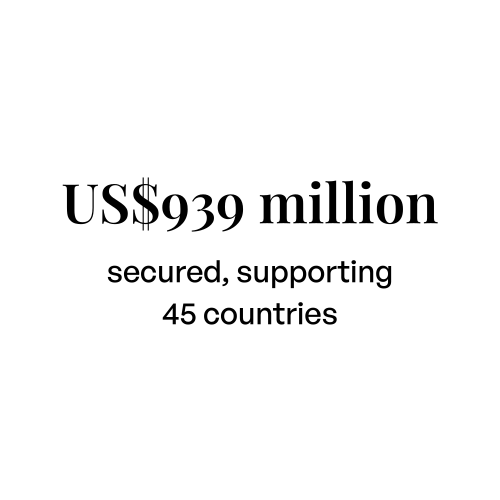
A UNICEF-led financing mechanism in which CIFF was an anchor funder, helps to leverage domestic financing for life-saving nutrition in high burden countries. In 2025 this fund secured US$939 million and supported 45 countries whilst unlocking large-scale country financing to address child malnutrition globally.
This report highlights just a few examples from a year of hard work across our sector. I would like to thank CIFF’s staff for their remarkable determination and resilience through another challenging year. The strength of this organisation lies in our people and partnerships and in the robust and supportive governance that enables us to continue our work with purpose and integrity. We are hugely grateful to our trustees for their guidance and especially to CIFF’s founder, Sir Chris Hohn, for his steadfast and inspiring commitment to children’s health, safety and agency. All our work reflects shared effort. We are one partner among many, and none of the impact described in this report was achieved by CIFF alone. Our partners’ leadership, commitment and drive for tangible results are a joy to behold and give me hope.
2025 showed us that two things can be true at once. We must acknowledge how far the world still has to go to meet the SDGs and deliver on the promise of Paris. At the same time, there are multitudes of resilient and resourceful people in all walks of life, driven by love, who dedicate their lives to serving their communities and beyond. The task ahead is demanding, but our steady progress shows what is possible when we act together with purpose and urgency.
CIFF stands ready to continue this work, to support those working for children today and in the future.